Modular skid systems water treatment
Industrial plants need reliable water — for process use, cooling, boiler feed, reuse, and compliant discharge — but building water treatment systems on site is slow, space-hungry, and hard to scale. This is why more and more plants are turning to modular skid systems for water treatment. By delivering treatment as pre-fabricated, factory-tested packages, modular skids solve the practical problems of industrial water treatment. This guide explains the advantages and where they apply.
For a broader introduction to the technology, see our overview of industrial skid systems.
What Are Modular Skid Systems in Water Treatment?
A modular skid system for water treatment is a pre-engineered treatment package built on a structural frame, with the filtration, dosing, separation, or demineralization equipment, plus piping, instrumentation, and controls, assembled and tested as one unit. "Modular" means the system is designed so that packages can be combined, expanded, or reconfigured — capacity is added by connecting more modules rather than rebuilding the plant. The package arrives ready to connect, having already been performance-tested in the shop.
The Advantages for Industrial Plants
1. Faster installation and start-up
Because the treatment package is fabricated and tested off site, installation is dramatically faster than building a treatment train in the field. Site preparation can happen in parallel with fabrication, and the unit arrives ready to connect and commission — getting the plant to treated water sooner.
2. Scalable capacity
Industrial water demand changes as plants grow or processes shift. Modular skids let capacity scale by adding modules or parallel trains, so a plant can expand treatment without replacing what it already has. This makes modular systems especially valuable for operations expecting growth or phased development.
3. Tested, predictable performance
A modular skid is performance-tested before it leaves the shop, so it arrives with verified treatment results rather than unknowns to be resolved during field commissioning. This reduces start-up risk and gives plants confidence the package will meet its targets.
4. Smaller footprint
Treatment equipment arranged on an optimized skid occupies far less space than a field-built equivalent — important in industrial plants where floor space is at a premium and treatment must fit around existing process areas.
5. Easier relocation and flexibility
Skid-mounted treatment can be relocated if plant layouts or requirements change, and modules can be reconfigured for new duties. This flexibility is hard to achieve with permanent, stick-built installations.
Common Modular Water Treatment Skids
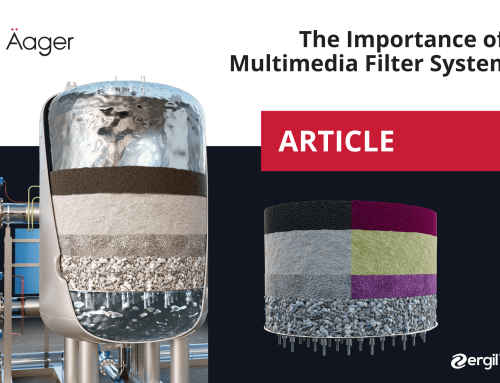
Industrial plants use a range of modular water treatment packages depending on their feed water and targets, including multimedia filter packages for suspended-solids removal, demineralization units for high-purity water, pH correction and dosing skids, and dissolved air flotation (DAF) units for removing solids, oils, and greases. These are part of Ergil's water and wastewater packages. See our full water industry range.
Where Modular Water Treatment Skids Are Used
Modular skid systems serve industrial plants, power generation, oil and gas facilities, and municipalities — for process water production, boiler feed-water treatment, cooling-water systems, water reuse, and wastewater treatment for compliant discharge. Wherever reliable water treatment is needed with limited space and a need to scale, modular skids are a strong fit.
Frequently Asked Questions
What does "modular" mean in water treatment skids?
It means the treatment system is built as packages that can be combined, expanded, or reconfigured. Capacity is increased by adding modules or parallel trains rather than rebuilding the plant, giving flexibility as demand changes.
Can modular skids handle both water supply and wastewater?
Yes. Modular packages are configured for process and high-purity water production as well as wastewater treatment and reuse, depending on the plant's feed water and discharge or reuse targets.
How is a water treatment skid sized?
Sizing is based on the feed-water analysis, the design flow rate, and the treated-water or discharge target, with margin for variability in the feed. Each package is engineered to its specific duty.