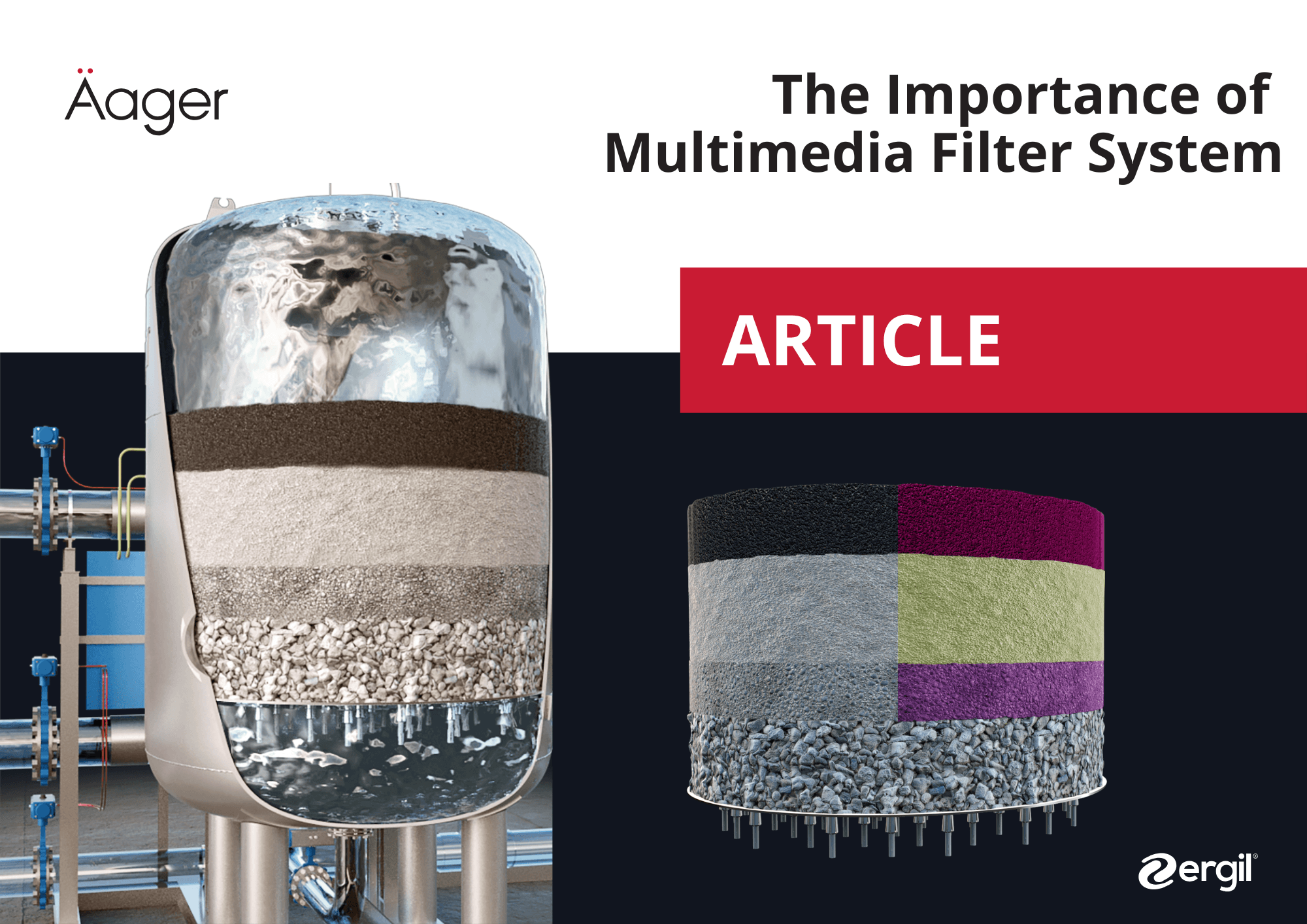
The Importance of Multimedia Filter System
The 2050 Green Deal aims to reduce water pollution and protect water resources. The water footprint is an indicator that measures the total volume of freshwater used to produce the goods and services consumed by individuals, communities, or businesses.
It consists of three main components:
- Blue Water Footprint: Freshwater withdrawn from surface water or groundwater sources and used for irrigation, industrial processes, or domestic consumption.
- Green Water Footprint: Rainwater stored in the soil and utilized by plants, particularly in agricultural production.
- Grey Water Footprint: The volume of freshwater required to dilute pollutants and maintain water quality standards.
The ISO 14046 Water Footprint Standard promotes transparent and comparable water footprint assessments by evaluating both water quantity and water quality impacts. By using multimedia filters in industrial and municipal water treatment applications, pollutant loads can be reduced, contributing to a lower grey water footprint in accordance with ISO 14046 principles.
Technical Features
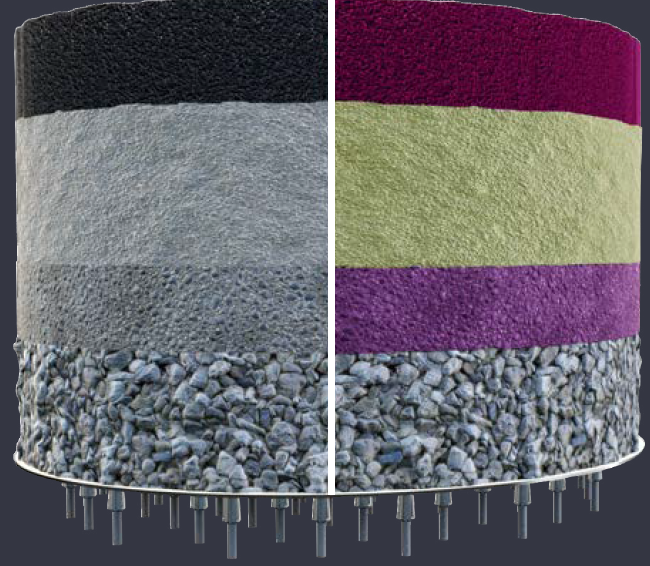
Multimedia filters are pressurized filtration systems in which filter media with different densities and particle sizes are arranged in layers.
The system typically utilizes media such as:
- Anthracite,
- Quartz sand,
- Garnet,
- Activated carbon, and support gravel.
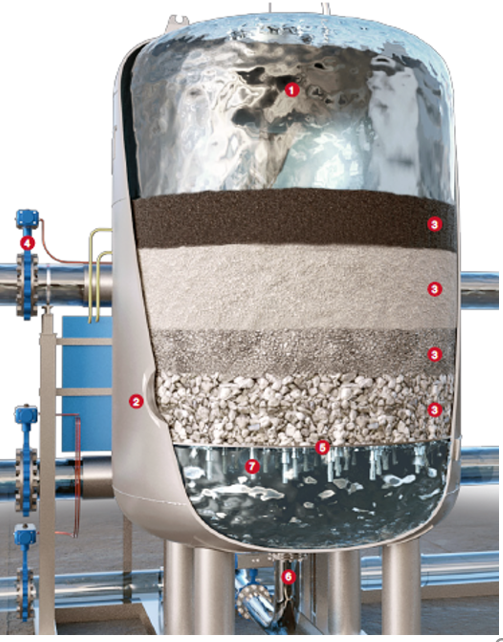
- During filtration, water enters the vessel from the top and passes through the media layers, where suspended solids, turbidity-causing particles, and other contaminants are effectively retained.
- The layered structure of the filter bed ensures optimal utilization of the entire media depth, resulting in high filtration efficiency and extended filtration cycles.
- Multimedia filters can be manufactured using carbon steel, stainless steel, or fiberglass-reinforced plastic (FRP) vessels and may be equipped with either manual or fully automatic backwash systems.
Designed to operate under a wide range of flow rates, pressures, and temperatures, multimedia filtration systems offer low pressure drop, long service life, and easy maintenance. These advantages make them a preferred solution for numerous water treatment applications, including process water treatment, wastewater reuse, drinking water treatment, cooling water filtration, and pre-treatment for reverse osmosis (RO) systems.
Phosphorus Removal
Phosphorus removal from both municipal and industrial wastewater, including textile dyeing and finishing effluents, can be achieved through multimedia filtration combined with chemical dosing. This approach effectively reduces phosphorus concentrations, helping to prevent eutrophication and protect natural water resources.
Desalination and Reverse Osmosis (RO) Pre-Treatment
Reverse osmosis (RO) desalination is widely used to produce freshwater from seawater and brackish water sources. Multimedia filters play a critical role as a pre-treatment stage by removing suspended solids and particulate matter, protecting RO membranes and improving overall system performance.
Cooling Water Filtration and Wastewater Treatment
Industries such as power generation, food and beverage processing, and manufacturing rely on clean cooling water for efficient operation. Multimedia filtration helps reduce suspended solids, scaling, and biological fouling, ensuring reliable cooling system performance. It also provides effective wastewater pre-treatment prior to advanced treatment processes or discharge.
Well Water Treatment
In rural and industrial areas where groundwater quality may be inadequate, multimedia filtration systems provide an effective solution for well water treatment. These systems reduce turbidity, remove particulate contaminants, and can be combined with specialized media to lower metal concentrations, making water suitable for potable or process applications.
Rainwater and Greywater Treatment
Multimedia filtration systems are well suited for the treatment and reuse of rainwater and greywater. By removing suspended solids and other contaminants, they enable the recovery of alternative water sources for non-potable applications, supporting sustainable water management practices.
Copper and Zinc Removal
Wastewater generated from electroplating, metal processing, and certain textile manufacturing processes may contain copper and zinc. When combined with appropriately selected filter media, multimedia filtration systems can effectively reduce metal concentrations and support compliance with environmental discharge standards.
Arsenic Removal
Arsenic contamination is a major concern in many drinking water sources. Multimedia filtration systems utilizing specialized media such as activated alumina or iron-based adsorbents can significantly reduce arsenic concentrations, helping water suppliers meet regulatory requirements and ensuring safe water quality.
Legal Requirements and Applicable Standards
The following standards will be considered during the design and engineering phase of the system:
- ASME Section VIII, Division 1
- ASME B31.3
- PD 5500 / BS EN 13445
The following standards will be taken into consideration for the materials and filtration media used in the manufacturing process:
- ASTM D4516, ASTM C778, ASTM
- API 620 and API 650
- ISO 3961 and ISO 5663 / ISO 5667
- AWWA B100, AWWA B101, and AWWA F111