ERGIL TECHNICAL ARTICLE · AVIATION FUEL SYSTEMS
Aviation Fuel Filtration
Protecting Jet Fuel Quality from Refinery to Aircraft
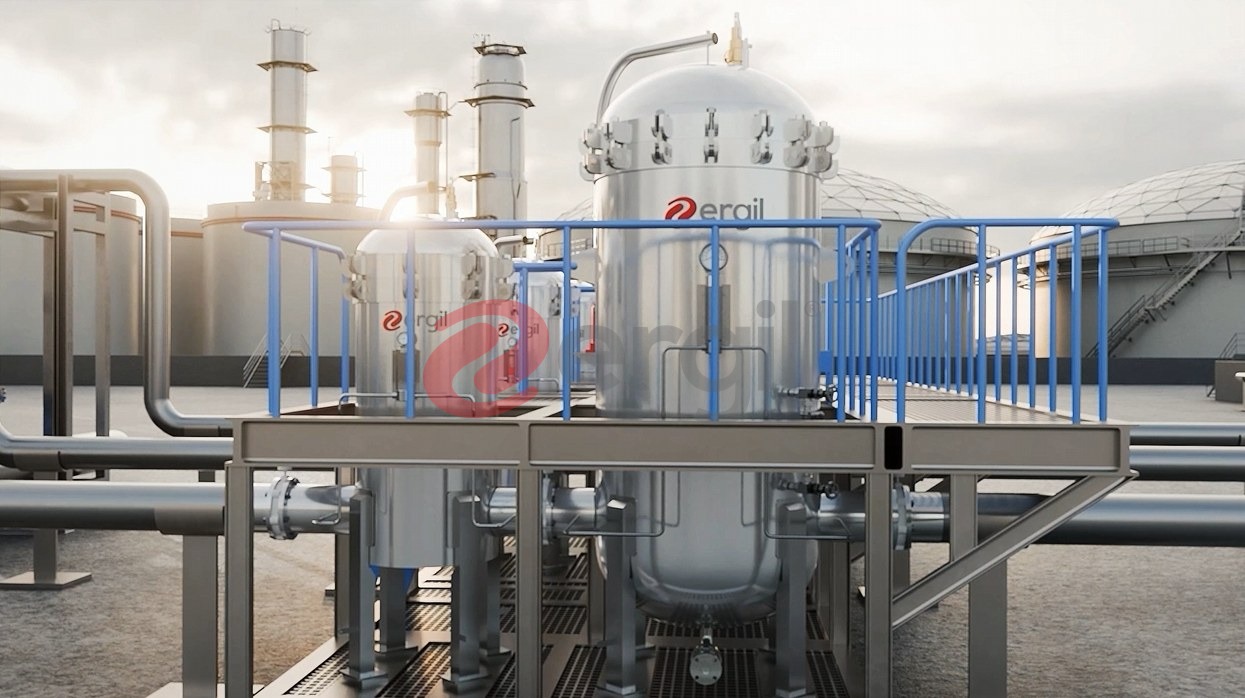
ERGIL aviation fuel filter/separator and micro filter package — engineered for clean, water-free jet fuel transfer.
Jet fuel is manufactured to some of the most rigorous specifications in the energy industry — yet the moment it leaves the refinery it becomes vulnerable. Between the refinery and the aircraft wing, fuel travels through tanks, pipelines, road tankers, barges, hydrant lines and refuellers, and at every transfer it can pick up rust, particulate, free water and surface-active contaminants. Filtration is the discipline that keeps that fuel airworthy.
This article explains the properties of jet fuel, why fuel cleanliness is a flight-safety issue, the international standards that govern aviation fuel filtration, and the multi-stage filtration architecture — prefilters, micro filters, coalescer/separators and clay treaters — used across the aviation fuel supply chain. It closes with an overview of ERGIL’s ASME-compliant aviation fuel filtration systems and the engineering considerations behind specifying them.
At a glance
• Aviation fuel filtration preserves fuel quality — it does not alter the fuel’s intrinsic properties.
• A typical treatment train runs: Prefilter → Micro Filter → Coalescer/Separator → Clay Filter (when required).
• Filter/separator and micro-filter performance is governed by Energy Institute (EI) specifications; vessels are designed to ASME Section VIII.
• ERGIL designs and manufactures the filter vessels and complete packages, engineered around qualified filtration elements.
Why Aviation Fuel Filtration Matters
Aviation fuel filtration is not merely a fuel-cleaning process; it is a critical engineering practice that directly influences flight safety, engine reliability and overall fuel-system performance. Although jet fuel is produced in accordance with internationally recognised specifications such as ASTM D1655, after it leaves the refinery it may be exposed to solid particles, free water, oxidation by-products and microbiological contamination during storage, transportation and refuelling.
The role of a fuel filtration system is therefore preventive rather than corrective: it does not modify the physical or chemical properties of the fuel, but preserves the quality and performance established during production by preventing contaminants from reaching critical fuel-system components. An effective, correctly specified filtration system protects downstream equipment, sustains engine performance, reduces maintenance and — most importantly — enhances flight safety.
Properties of Jet Fuel and the Need for Filtration
Jet fuel is a kerosene-based fuel developed for gas-turbine aircraft engines. The two grades in widest use today are Jet A and Jet A-1. Jet A-1 is generally preferred for long-range and low-temperature operations because it has a lower freezing point than Jet A, improving low-temperature pumpability at altitude.
Jet A vs. Jet A-1 — key distinction
| Property | Jet A | Jet A-1 |
|---|---|---|
| Maximum freezing point | −40 °C | −47 °C |
| Primary use | Predominantly North America (domestic) | International / global standard |
| Governing specification | ASTM D1655 | ASTM D1655 · Def Stan 91-091 |
| Filtration requirement | Identical treatment principles | Identical treatment principles |
For jet fuel to be used safely and efficiently it must exhibit a defined set of performance characteristics. Filtration protects several of these directly — particularly purity, flowability and non-corrosive behaviour — by keeping water and solids out of the fuel.
Required performance characteristics of jet fuel
| Characteristic | Why it matters | Filtration relevance |
|---|---|---|
| High energy content | Provides the chemical energy for engine thrust | Water and contaminants displace usable fuel energy |
| Good combustion | Complete, stable combustion; minimal soot/carbon | Clean fuel promotes correct atomisation |
| Thermal stability | Resists varnish/deposit formation under heat | Removes oxidation by-products and gums |
| Lubricity | Lubricates pumps and fuel-control components | Removes abrasive particles that accelerate wear |
| Flowability | Maintains pumpability at low temperature | Free-water removal prevents ice crystals blocking filters |
| Appropriate volatility | Safe vaporisation and efficient combustion | Unaffected by filtration — preserved, not altered |
| Non-corrosive | Compatible with system materials | Water/microbe removal limits corrosion |
| Purity | Free from solids and free water | The core objective of the filtration system |
How Contamination Enters the Fuel Supply Chain
From the refinery to the aircraft, jet fuel passes through storage tanks, pipelines, transport vehicles and refuelling equipment. Throughout this chain the fuel can become contaminated with rust, metallic particles, dust, free water and microorganisms. Effective filtration before the fuel reaches the engine is therefore essential to protect fuel quality, system reliability and flight safety.
Principal contaminant classes
| Contaminant | Typical sources | Operational risk | Removed by |
|---|---|---|---|
| Solid particulate | Rust, weld scale, pipeline debris, sand, dust | Injector wear, valve sticking, coalescer fouling | Prefilter · Micro filter |
| Free water | Condensation, tank bottoms, wet transfers | Ice formation, corrosion, microbial growth | Coalescer / separator |
| Surfactants | Certain additives, cleaning residues, upstream carryover | Disarm coalescers → poor water separation | Clay filter |
| Oxidation by-products | Fuel ageing during storage | Gums, deposits, filter blockage | Micro filter · Clay filter |
| Microbiological | Water/fuel interface („bug“ growth) | Corrosion, biofilm, filter plugging | Water removal (root cause) |
In short, filtration preserves fuel quality across seven fronts: it protects energy content, combustion performance, thermal stability and lubricity; safeguards low-temperature fuel flow by removing free water that could freeze; prevents corrosion from water and microbial activity; and maintains overall fuel cleanliness to protect critical components downstream.
The Standards That Govern Aviation Fuel Filtration
Aviation fuel quality control is one of the most tightly standardised areas of fuel handling. Two families of standards apply: fuel specifications, which define what clean jet fuel is, and equipment/qualification standards, which define how filtration equipment must perform. Specifying to the correct standards is what separates a compliant fuelling installation from a liability.
| Standard | Issued by | Scope / relevance |
|---|---|---|
| ASTM D1655 | ASTM International | Standard specification for aviation turbine fuels (Jet A / Jet A-1) |
| Def Stan 91-091 | UK Ministry of Defence | Jet A-1 specification widely referenced internationally |
| EI 1581 | Energy Institute | Specification & qualification for aviation jet-fuel filter/separators (the defining filter/separator standard; Categories M, M100, C) |
| EI 1590 | Energy Institute | Specification & qualification for aviation-fuel micro-filters |
| EI 1596 | Energy Institute | Design & construction of dirt-defence / prefilter filter monitors and vessels |
| EI 1583 | Energy Institute | Laboratory tests & performance for aviation-fuel filter monitors |
| ASME Sec. VIII Div.1 | ASME | Design & construction code for the pressure-retaining filter vessels |
| IP / API standards | Energy Institute / API | Sampling, cleanliness assessment and fuel-handling practice |
| JIG / IATA guidance | JIG · IATA | Fuel quality-control procedures across the into-plane supply chain |
Where ERGIL fits
ERGIL designs and manufactures the pressure vessels and complete filtration packages to ASME Section VIII, engineered to house filtration elements qualified to the applicable Energy Institute specifications (EI 1581 / EI 1590). This division of responsibility — code-compliant vessel plus qualified media — is standard practice in aviation fuel filtration and is how a package earns its place in an airport, terminal or into-plane system.
Filters Used in Aviation Fuel Filtration
Because solid particles, free water and surface-active contaminants each require a different separation mechanism, aviation fuel filtration relies on a multi-stage approach rather than a single filter. The four building blocks — prefilters, micro filters, coalescer/separator filters and clay filters — are combined to suit the contaminant profile and duty of each installation.
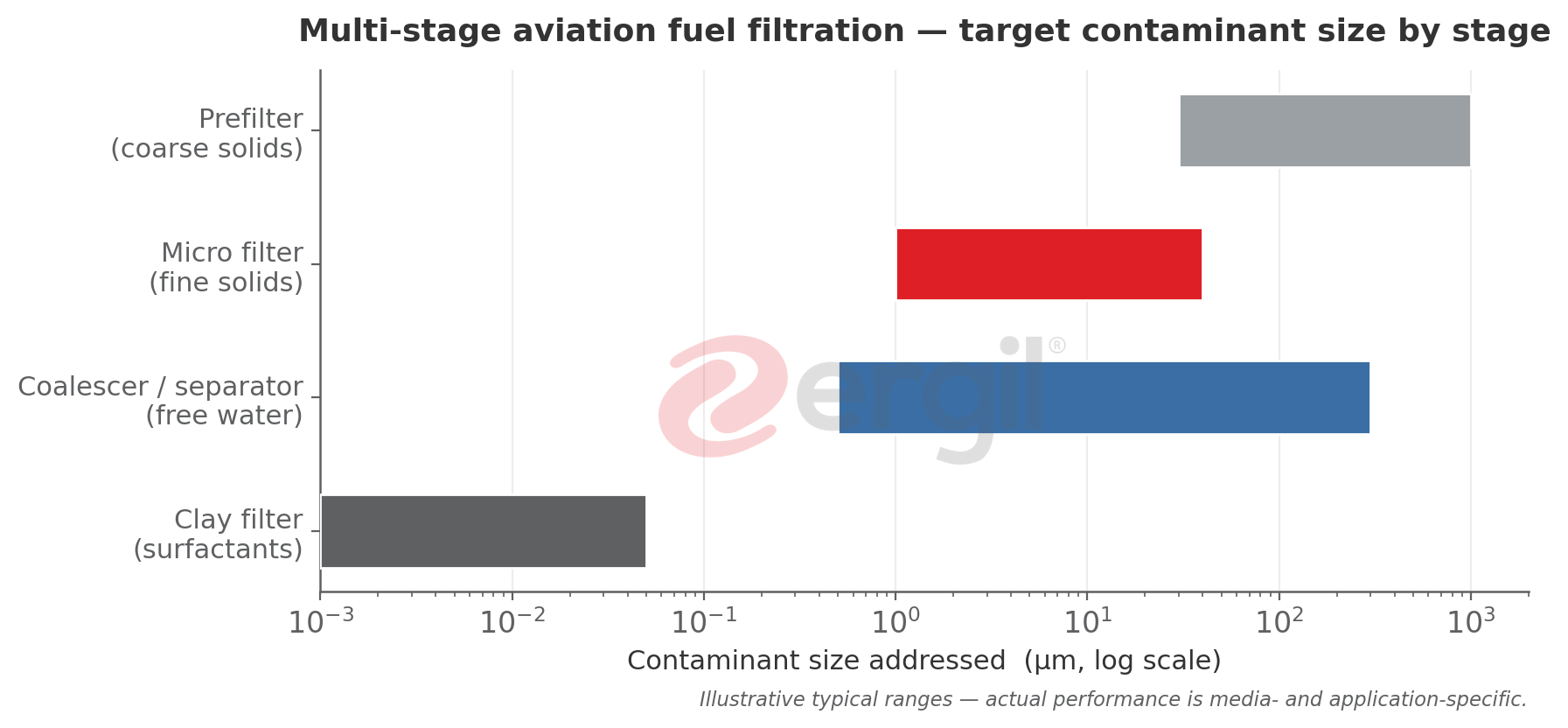
Each stage targets a different contaminant size class — from coarse pipeline debris down to dissolved surfactants.
Prefilter — the first line of defence
A prefilter removes large solid contaminants — rust, weld debris, pipeline particles, sand and dust — protecting downstream elements from excessive contaminant loading. Prefilters are not high-efficiency final filters; their job is to reduce the particulate load reaching the micro filter and coalescer/separator, extending element life and lowering maintenance cost. They are widely used in high-flow storage facilities, terminals and transfer systems.
Micro filter — high-efficiency solids removal
Micro filters provide high-efficiency removal of fine solids, typically using high-performance microglass media capable of retaining particles as small as 1–2 µm with high efficiency. They capture rust, metallic particles, sand, dust, filter fibres, and oxidation by-products and deposits — protecting fuel pumps, control valves and, critically, the downstream coalescer elements that are highly sensitive to particulate loading.
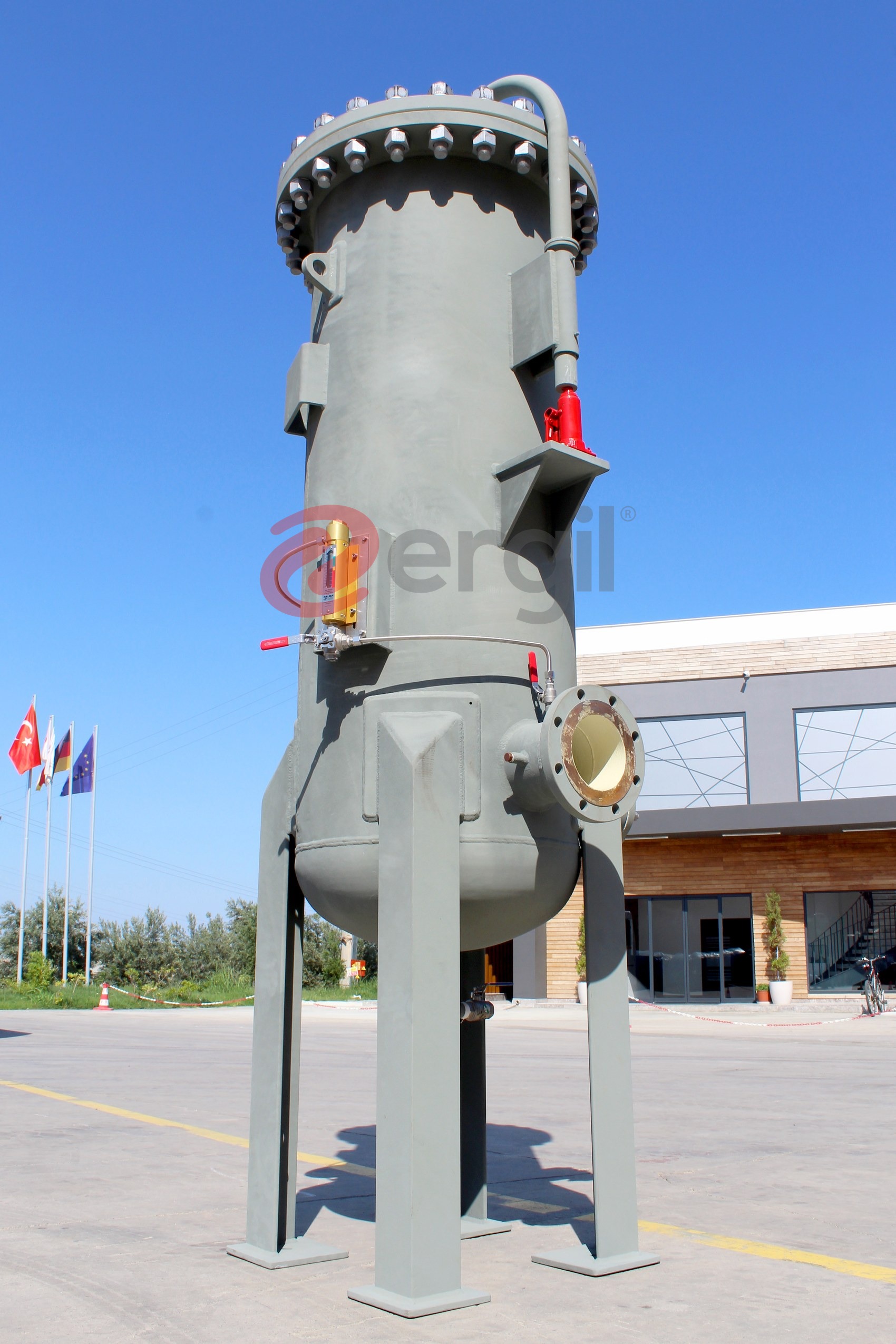
ERGIL vertical aviation micro filter.
Coalescer / separator — free-water removal
Coalescer/separator filters are among the most critical components in an aviation fuel system, because they remove free water from the fuel. They use two complementary element types working in sequence:
The result: removal of free water, prevention of ice formation, reduced corrosion, suppression of microbiological growth, and delivery of clean fuel to the aircraft. These systems are used across airport storage, hydrant fuelling, refuellers and into-plane units.
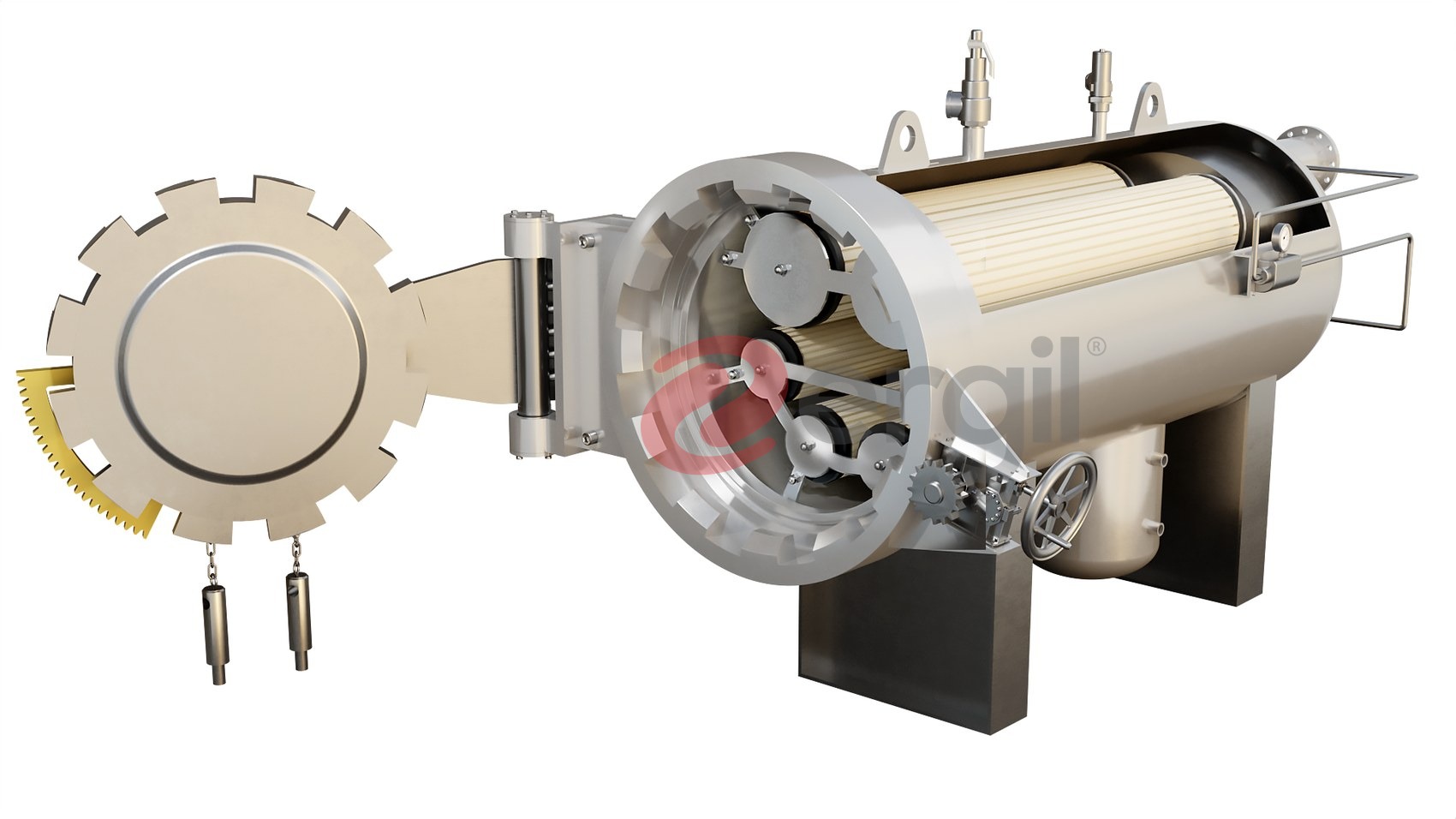
Cutaway of an ERGIL horizontal filter/separator with quick-opening closure — coalescer and separator elements arranged for staged water removal.
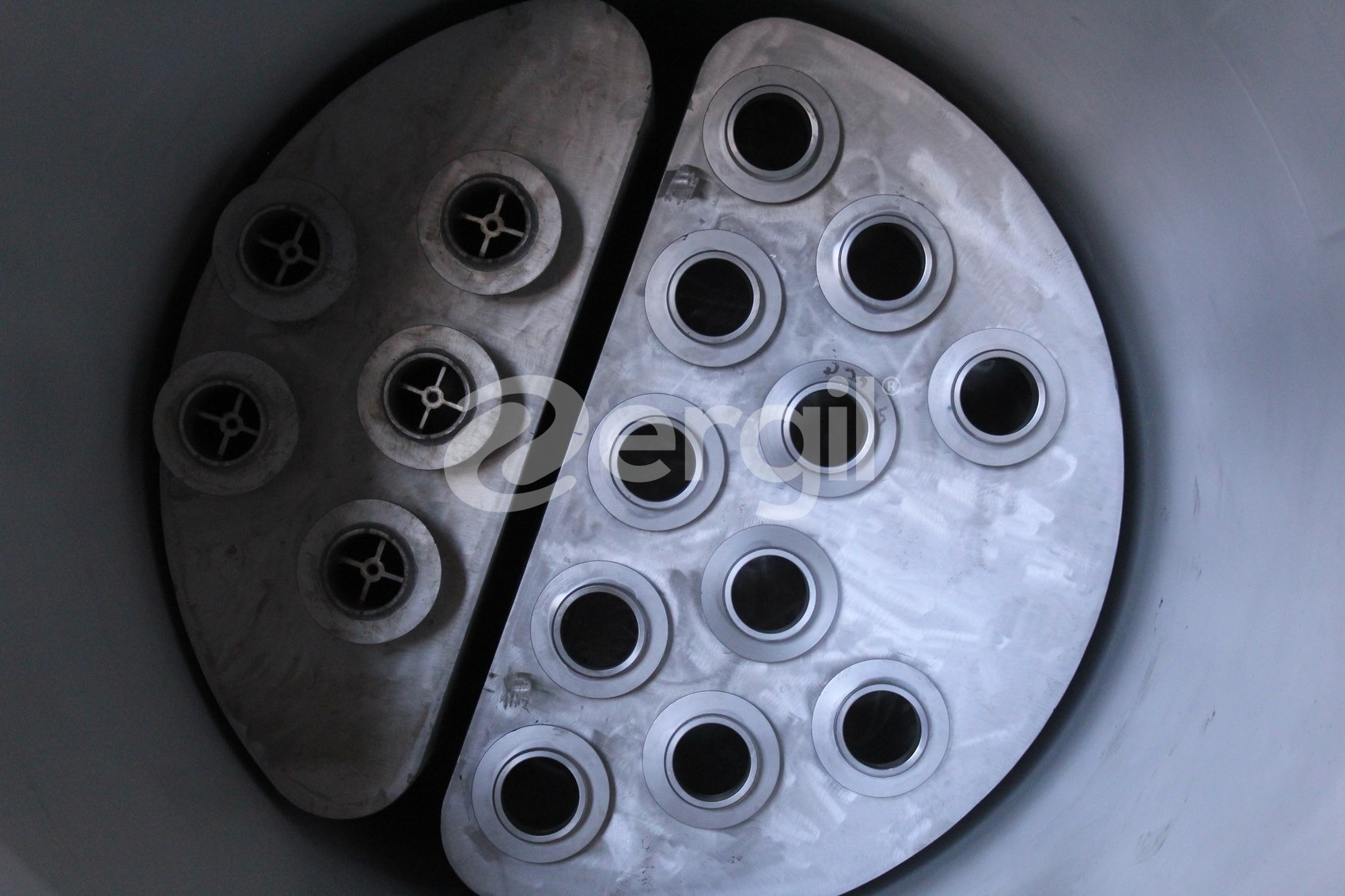
Internal tube-sheet arrangement: coalescer element ports (left) and separator ports (right) — precision that determines separation performance.
Clay filter — surfactant removal
A clay filter is an adsorption-based system that removes surfactants and other polar contaminants. Surfactants lower the interfacial tension between fuel and water, making water separation harder and directly degrading coalescer performance. Clay treaters use activated clay — typically Fuller’s Earth or attapulgite — to adsorb these polar compounds. They are common in refineries, terminals and large distribution systems. Although additive and handling improvements have reduced their use in some applications, they remain the correct solution wherever surfactant removal is needed to protect water-separation performance.
The four filter types at a glance
| Filter type | Primary function | Target contaminant | Typical position |
|---|---|---|---|
| Prefilter | Coarse solids removal / load reduction | Rust, scale, sand, debris (>30 µm) | Upstream / terminal inlet |
| Micro filter | High-efficiency fine-solids removal | Particulate to 1–2 µm | Before coalescer |
| Coalescer / separator | Free-water removal | Emulsified & free water | Core water-removal stage |
| Clay filter | Surfactant / polar-compound adsorption | Surfactants, soaps, oxidation products | When water separation is at risk |
Combining the Stages: The Treatment Train
Filtration elements are rarely used alone. They are arranged in a multi-stage configuration where each stage performs a specific function and complements the others. A typical sequence is:
Prefilter → Micro Filter → Coalescer / Separator → Clay Filter (when required)
Coarse contaminants are removed first by the prefilter, fine solids by the micro filter, then free water by the coalescer/separator; where necessary a clay filter adsorbs surfactants that would otherwise impair water separation. This integrated approach delivers the cleanliness required for safe, reliable aircraft operation.
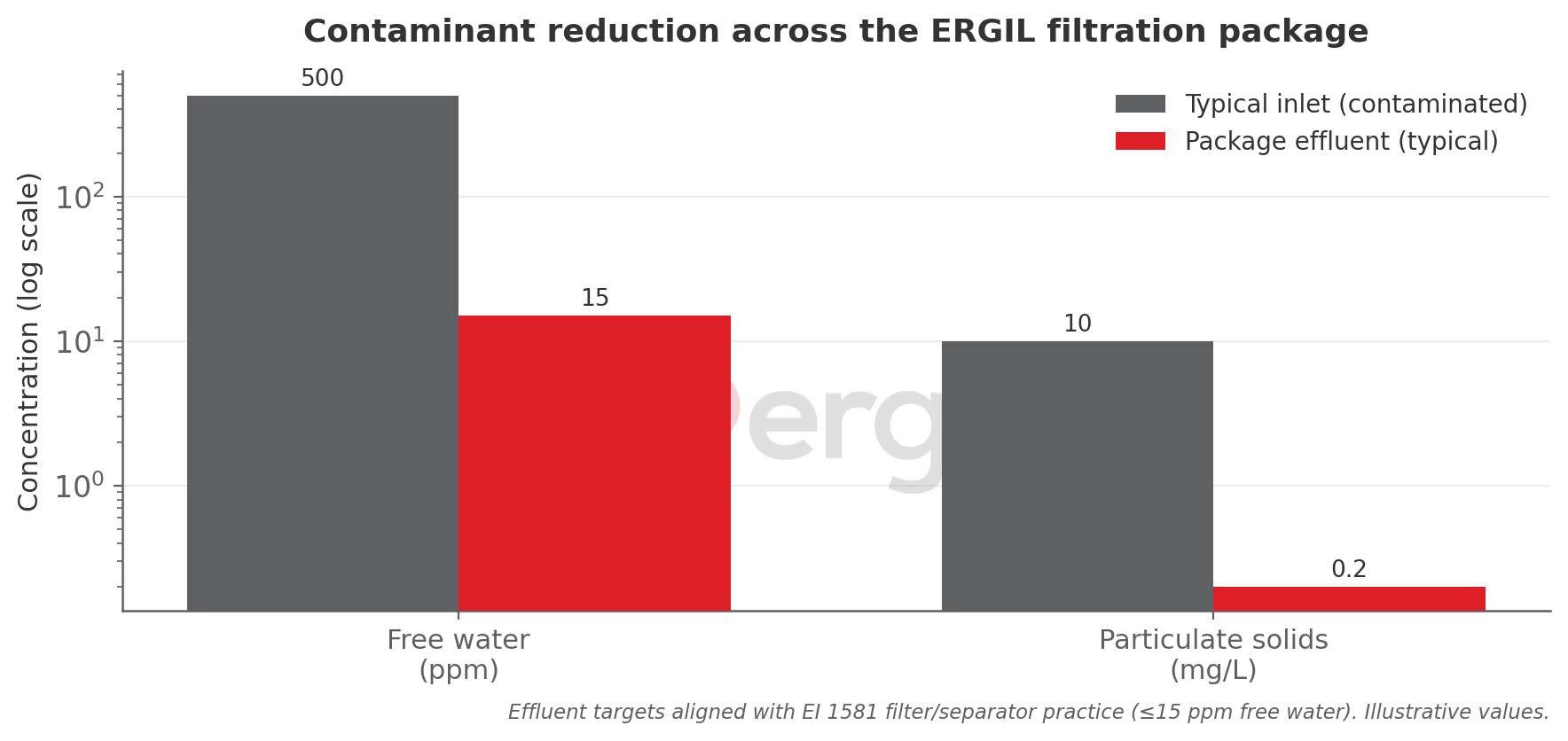
Contaminant reduction across the package — free water driven toward EI 1581 filter/separator effluent practice.
Selecting the Appropriate Filtration System
Correct selection is essential for fuel quality, reliable operation and flight safety. The choice must consider not only filtration efficiency but also contaminant type, fuel characteristics, capacity and operating conditions. A poorly selected system can cause inadequate contaminant removal, excessive pressure drop, premature blockage, equipment failures and higher maintenance cost.
| Selection driver | What to evaluate |
|---|---|
| Contaminant type | Solids → micro filter; free water → coalescer/separator; surfactants → clay filter. The train is built around the contaminants actually present. |
| Filtration efficiency | Media and micron rating set the smallest particle retained — balanced against pressure drop, dirt-holding capacity and element life. |
| Flow rate & pressure | Vessel and elements sized for maximum flow; operating beyond design raises differential pressure and shortens element life. |
| Fuel characteristics | Grade, temperature, viscosity and pressure — water separation becomes critical at low temperature where icing can occur. |
| Operation & maintenance | Change-out intervals, ease of element replacement, dirt-holding capacity and lifecycle operating cost. |
Differential pressure is the primary indicator of element condition. Monitoring it enables condition-based replacement rather than fixed-interval guesswork — elements are changed as they approach their recommended differential-pressure limit, typically around 1.0 barg (≈15 psid).
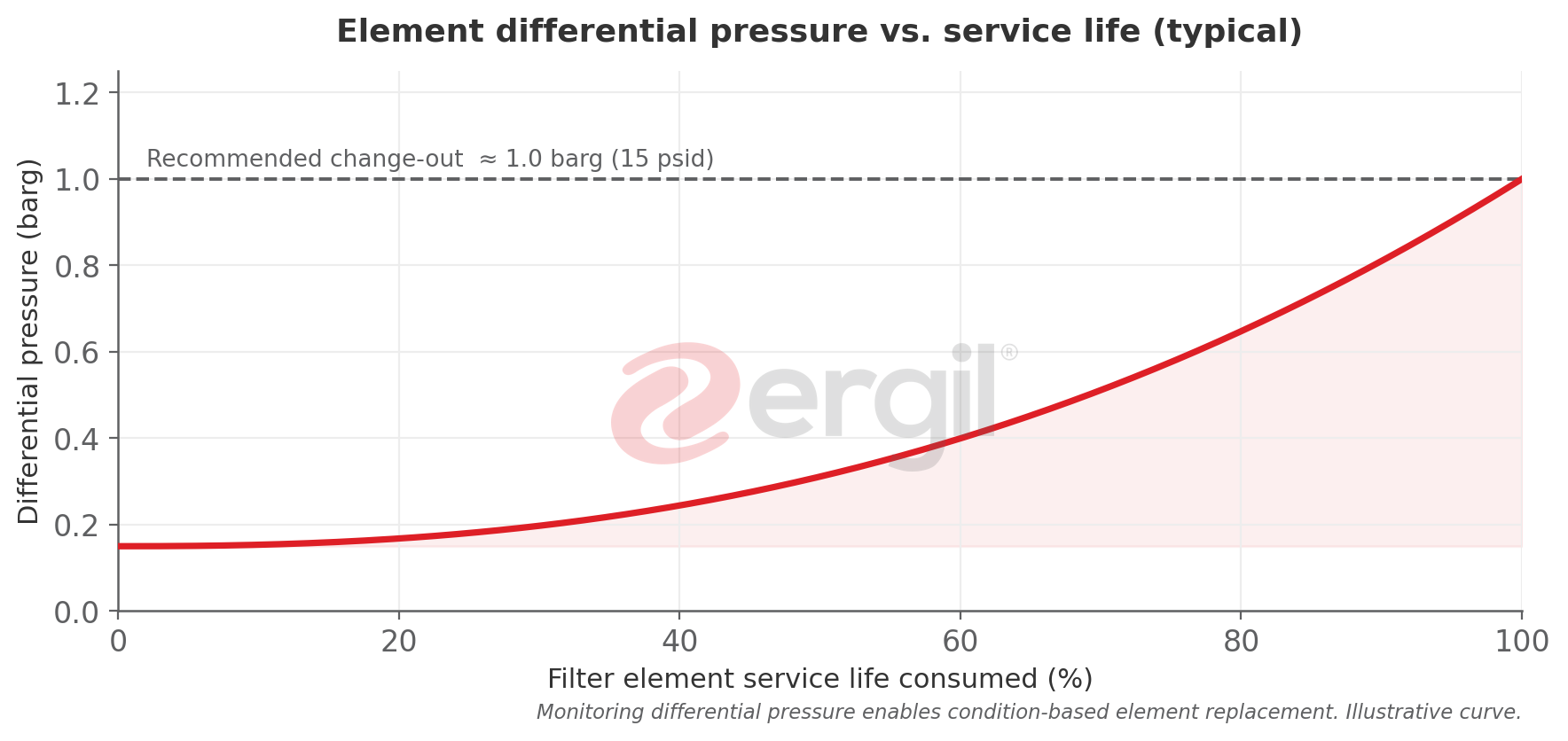
As elements load with contaminant, differential pressure rises toward the change-out threshold.
ERGIL Aviation Fuel Filtration Systems
ERGIL designs and manufactures advanced aviation fuel filtration systems for the safe handling, purification and delivery of clean fuel across the aviation fuel supply chain. Engineered for reliability, operational safety and long-term performance, they are available in single- or multi-stage configurations incorporating prefilters, micro filters, coalescer/separator filters and clay filters to meet a wide range of operational and project-specific requirements. See our Jet A-1 400 m³/h oil-terminal package case study for a delivered example.
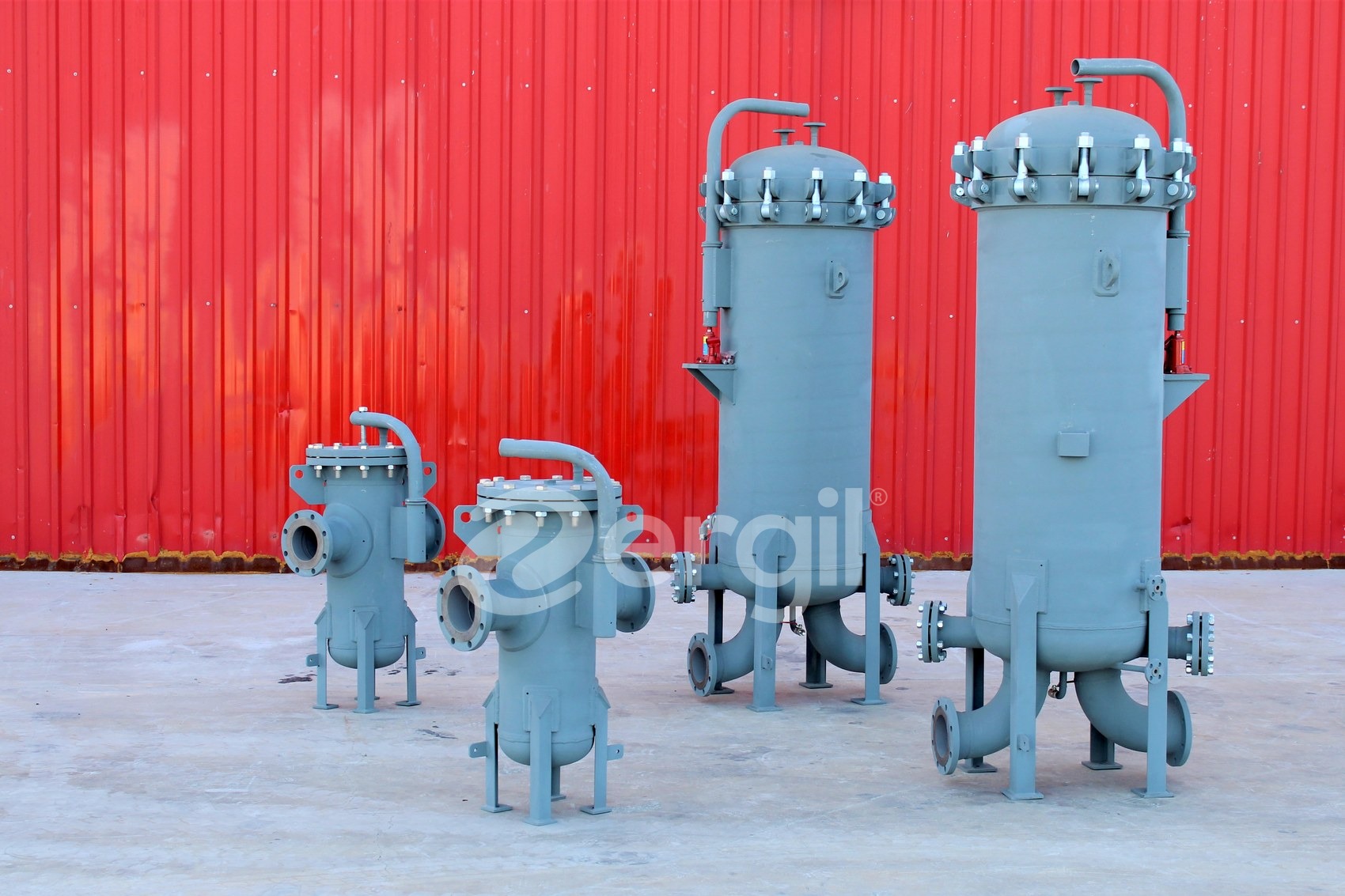
ERGIL aviation micro filters and coalescer/separators across a range of capacities.
Design & manufacturing features
Operating & equipment features
| Operating capabilities | Equipment features |
|---|---|
| Flow capacities customised to the project | Differential-pressure gauge / transmitter connections |
| Design pressure to process specification | Vent and drain nozzles; automatic air elimination |
| Temperatures suited to aviation-fuel duty | Replaceable elements for simplified maintenance |
| Horizontal & vertical vessel configurations | Bolted-cover or quick-opening closure options |
| Single- and multi-element housings | Internal & external protective coating systems |
| Flexible nozzle arrangements | Optional instrumentation & customer-specific accessories |
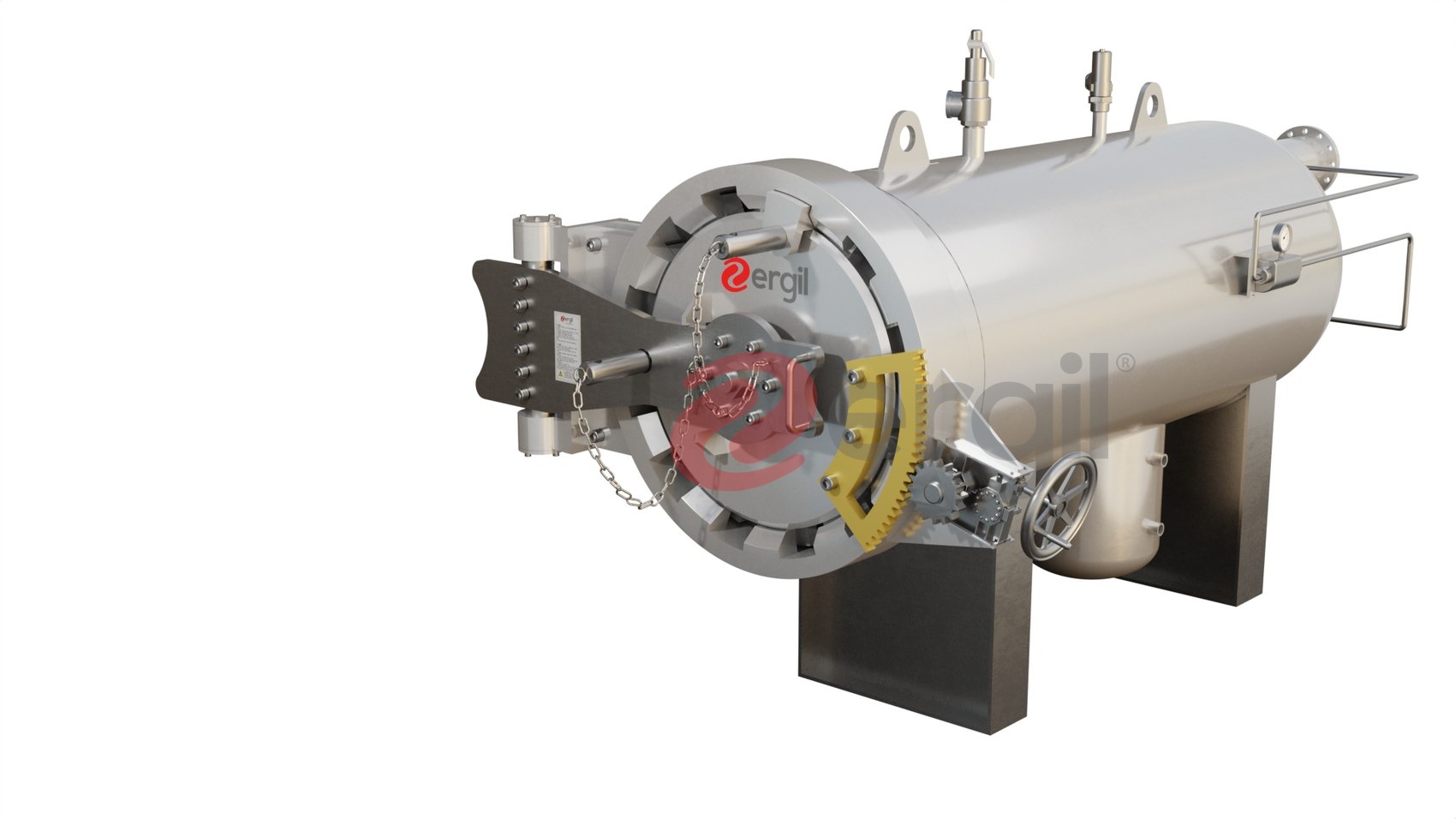
Horizontal filter/separator with quick-opening closure — fast, safe element access for high-throughput duties.
Available filtration solutions
Prefilter systems · Micro filter systems · Coalescer/separator systems · Clay filter systems · Multi-stage filtration packages · Skid-mounted filtration systems · Custom-engineered solutions.
Typical applications
Airport fuel storage terminals · Hydrant fuelling systems · Refueller vehicles · Fuel transfer stations · Aviation fuel depots · Bulk fuel storage facilities.
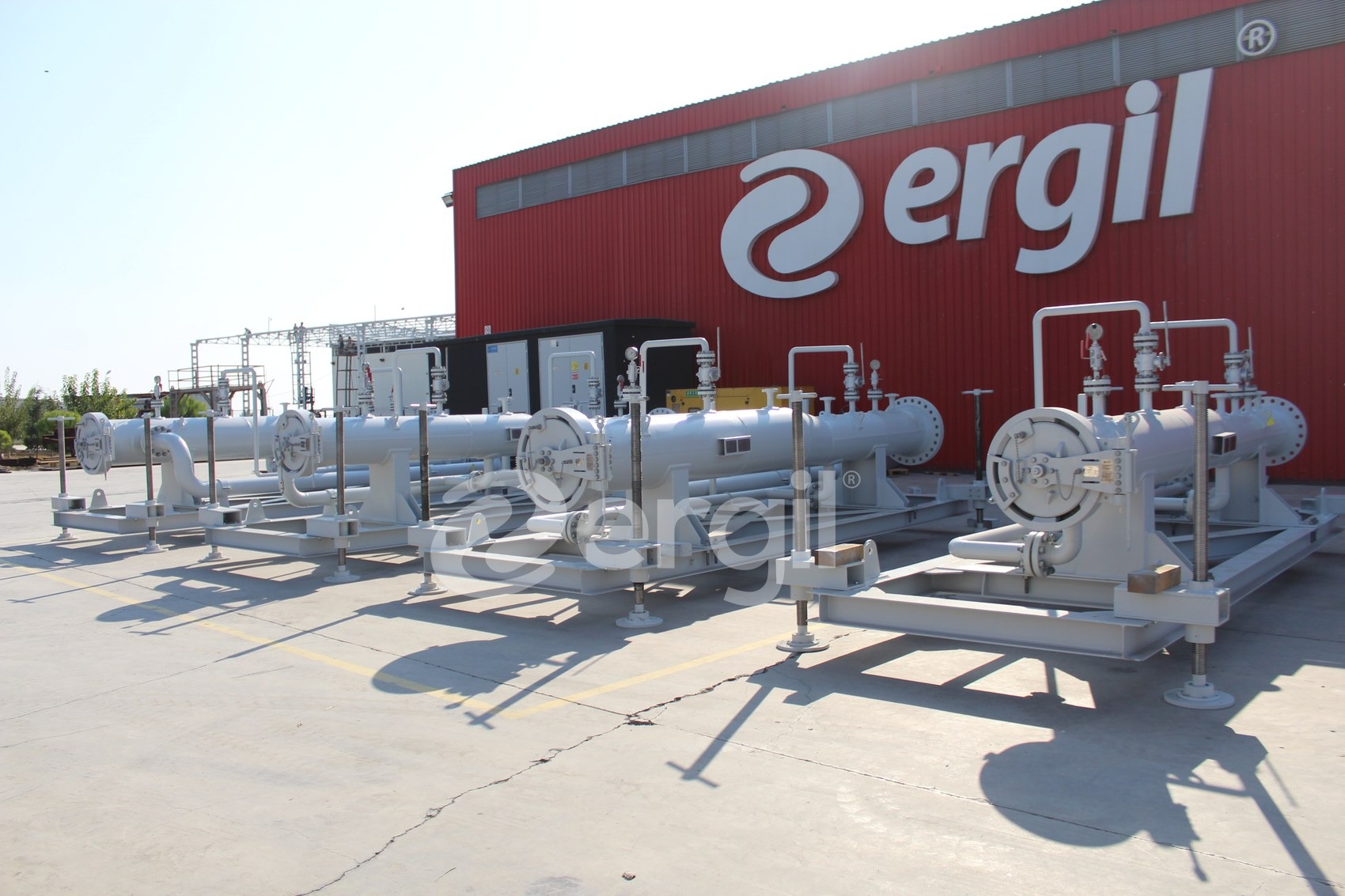
Skid-mounted, adjustable filtration packages — configurable for terminal, mobile and offshore fuel-handling duties.
Key advantages
| ASME-compliant vessel design | Extended filter-element service life |
| Modular, customisable configurations | Simplified maintenance & element replacement |
| High contaminant-removal efficiency | Reliable operation in demanding conditions |
| Low differential pressure | Optimised lifecycle cost |
Conclusion
Aviation fuel filtration is a critical engineering practice that directly influences flight safety, engine reliability and fuel-system performance. Solid particles, free water and other impurities accelerate wear, promote corrosion, clog filtration components and degrade engine performance — so selecting the right filtration technologies and building a properly designed multi-stage system are fundamental to effective aviation fuel management.
Within that system, prefilters, micro filters, coalescer/separators and — where required — clay filters operate as complementary stages: prefilters protect downstream equipment, micro filters remove fine particulate, coalescer/separators remove free water to limit corrosion, icing and microbial growth, and clay filters adsorb surfactants to maintain water-separation performance. Together they preserve fuel quality, extend equipment life, reduce maintenance and improve reliability.
With extensive engineering expertise, ASME-compliant vessel design, advanced manufacturing and application-specific solutions, ERGIL supplies reliable filtration equipment for fuel storage terminals, hydrant fuelling systems, refuellers and other aviation fuel infrastructure — helping preserve fuel quality while supporting the safe, dependable operation of aviation fuelling systems.
Specify your aviation fuel filtration package with ERGIL
From a single vessel to a complete multi-stage, skid-mounted package, ERGIL’s engineering team designs to your flow, pressure, contaminant profile and applicable standards.
Frequently Asked Questions
What is the purpose of aviation fuel filtration?
To preserve jet-fuel quality by removing solid particulate, free water and surfactants before the fuel reaches the aircraft. Filtration does not change the fuel’s properties — it protects the cleanliness and performance established at the refinery, safeguarding engine reliability and flight safety.
What is the difference between a coalescer and a separator?
In a filter/separator they work in sequence. The coalescer element is hydrophilic and merges tiny suspended water droplets into large ones; the hydrophobic separator element then repels those droplets so they settle out while clean fuel passes through. Together they remove free water from the fuel.
What standards apply to aviation fuel filter/separators?
Filter/separators are specified and qualified to Energy Institute EI 1581; micro filters to EI 1590; filter monitors to EI 1583. The fuel itself is specified to ASTM D1655 and Def Stan 91-091, and the pressure vessels are designed to ASME Section VIII.
Why is free water so dangerous in jet fuel?
Free water promotes corrosion and microbiological growth, and at altitude it can freeze into ice crystals that block filters and restrict fuel flow. Removing free water is one of the primary objectives of aviation fuel filtration.
When is a clay filter needed?
When surfactants or other polar contaminants are present. Surfactants reduce fuel–water interfacial tension and disarm coalescers, degrading water separation. A clay (Fuller’s Earth / attapulgite) treater adsorbs them to restore separation performance.
How do operators know when to change filter elements?
By monitoring differential pressure across the elements. As they load with contaminant the differential pressure rises; elements are replaced as they approach their recommended limit (typically ≈1.0 barg / 15 psid), enabling condition-based maintenance.